Ancient Egyptians mummified cats chiefly as offerings to feline deities, especially Bastet. A pilgrim could obtain a mummy at a temple and dedicate it as an act of devotion, gratitude or supplication. These animals were not all beloved pets preserved by grieving owners: many were bred specifically to become religious offerings.
It was not simply because Egyptians “worshipped cats”
The familiar claim that Egyptians treated every cat as a god is misleading. Animals could represent, embody or communicate qualities associated with a deity, but that did not automatically make every living member of a species divine.
Cats also had practical and domestic value. They helped control mice, rats and snakes around homes and food stores, and they appear as household companions in tomb paintings. The vast concentrations of feline mummies discovered by archaeologists, however, mostly belong to a different setting: the world of votive offerings.
A votive offering was an object or creature dedicated to a deity. It could express gratitude, accompany a prayer or seek favourable intervention. A cat mummy was therefore more than the preserved remains of an animal. Once prepared and ritually presented, it acquired a religious purpose.
The connection between cats and Bastet
The principal recipient of these offerings was Bastet, a powerful goddess whose main cult centre stood at Bubastis in the Nile Delta. Her imagery changed over time. She originally possessed leonine characteristics but later appeared as a domestic cat or a woman with a feline head.
Bastet was connected with protection and forces that safeguarded family and domestic life. The cat offered an apt image of this balance: alert and protective, capable of affection but also of sudden aggression.
This association did not mean that every mummy contained an individual goddess. The animal could serve as a divine manifestation, sacred image or suitable intermediary through which a worshipper approached her. The British Museum explains that devotees could pay for a cat’s ceremonial burial as a demonstration of devotion to Bastet.
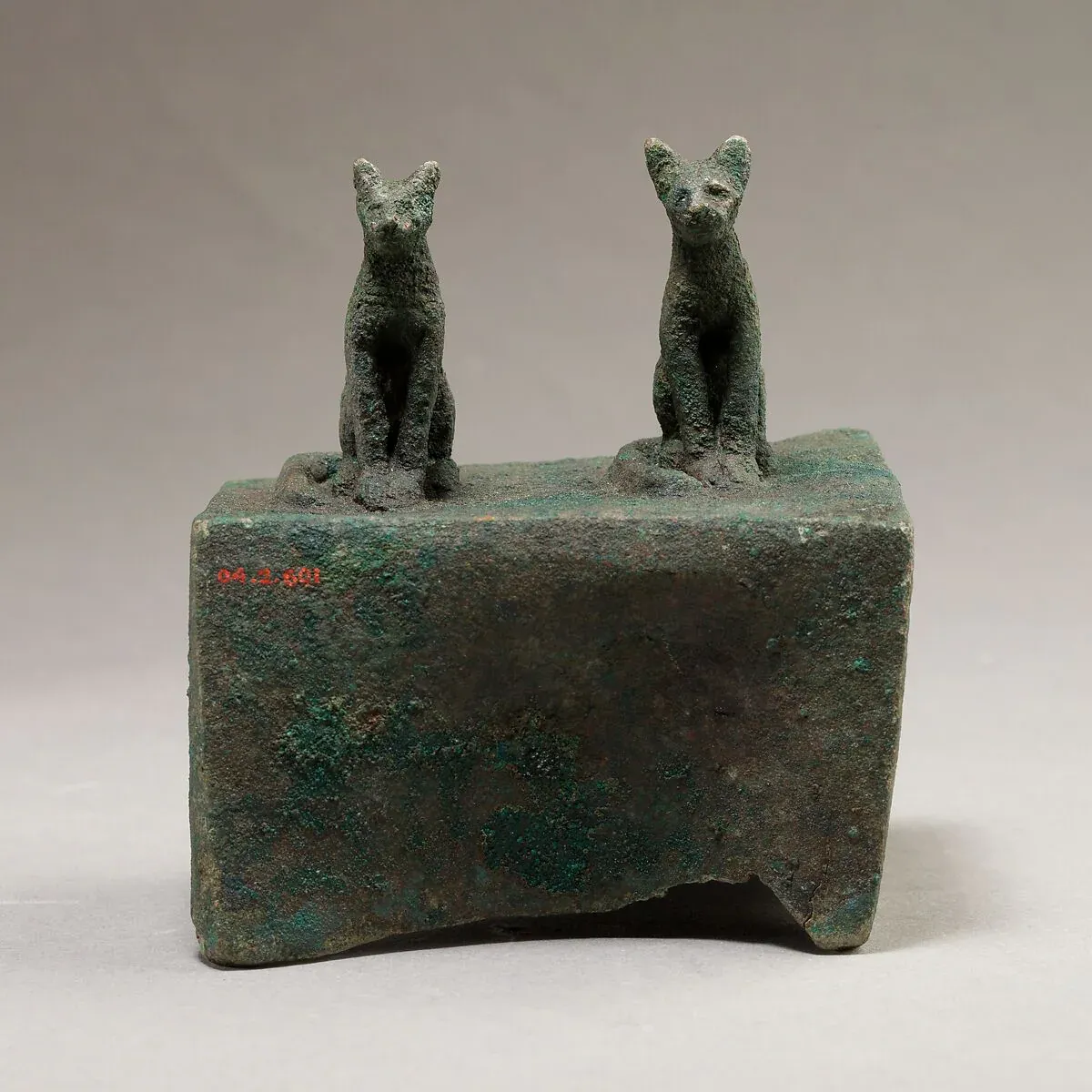
Image credits and licence
An offering that could carry a message
With appropriate caution, the practice can be compared to lighting a candle or leaving an ex-voto at a shrine. A worshipper gave something tangible in order to establish or maintain a relationship with the divine.
Egyptologists have suggested that a mummified animal might also act as a messenger between a person and a god. Consecrating and burying it within sacred ground could symbolically carry a request into the divine realm.
We cannot recover the words, expectations or emotions of every pilgrim. Egyptian religion changed over thousands of years and was never defined by a single explanatory handbook. Interpretations instead depend on objects, inscriptions, archaeological contexts and comparisons with other votive practices.
Animal mummies did not all serve the same purpose
Egyptians mummified cats, dogs, ibises, falcons, crocodiles, snakes, fish and many other creatures. These remains could perform several different functions.
Some may have been pets intended to accompany their owners after death. Others were provisions placed in a tomb as food for the deceased. Certain exceptional animals were regarded as living manifestations of a deity, cared for during their lifetime and ceremonially buried after a natural death.
The largest category, however, consisted of votive animals produced for dedication at temples. A study published in Scientific Reports distinguishes these categories and explains that large-scale production of votive mummies flourished particularly from the Late Period into Roman times.
A wrapped cat should not therefore be assumed to represent a family pet. Its meaning depends on where it was discovered, how it was prepared and what the bundle actually contains.
Production on a temple scale
Demand became immense during the first millennium BCE and the early centuries CE. Sanctuaries required animals, keepers, embalmers, linen, resins, containers and burial space. The practice developed an organised scale that might now be described as a religious industry.
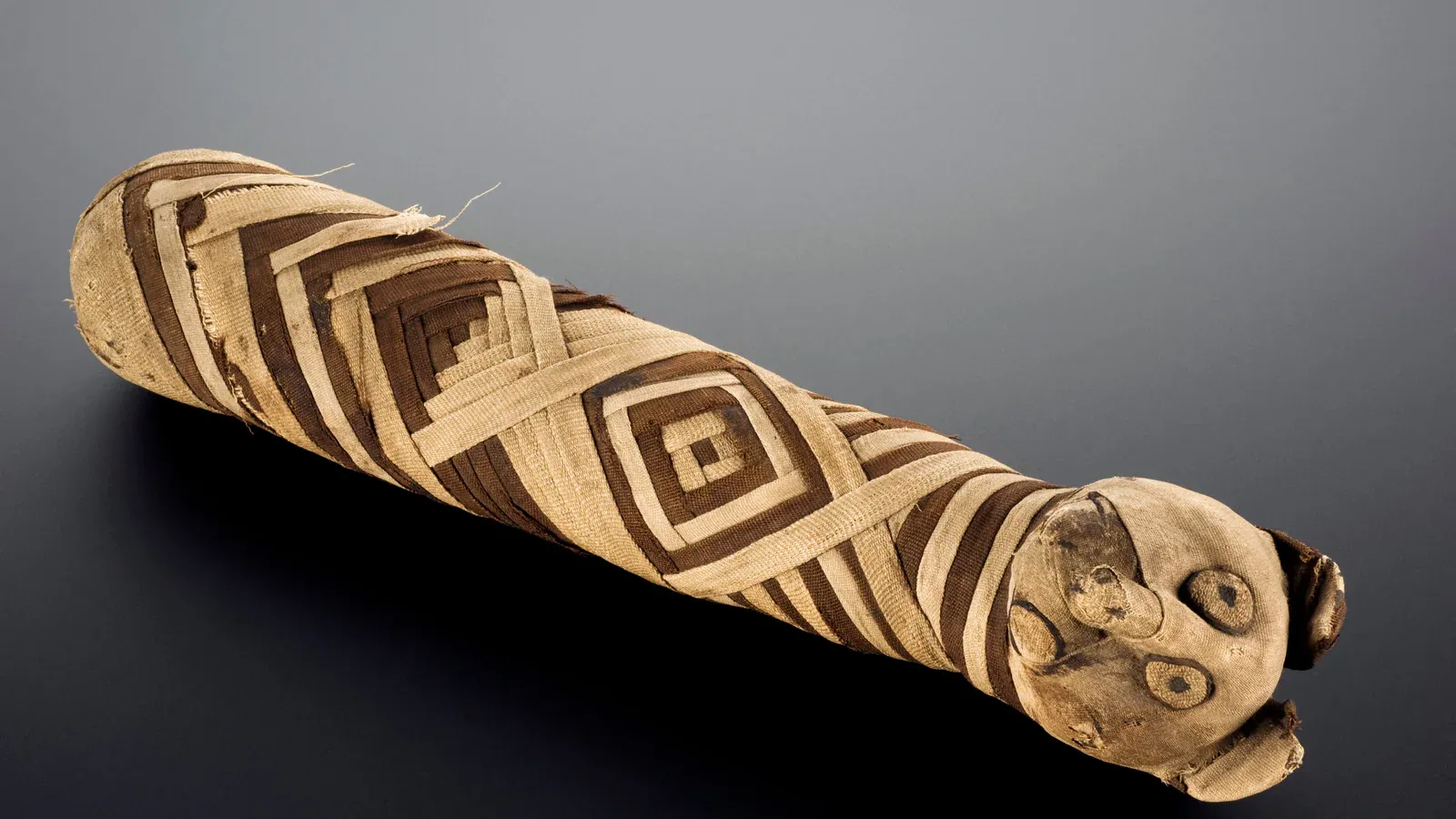
Cats were bred near some temple complexes. Following death—or deliberate killing—they were dried, treated with embalming substances and wrapped in linen. Some bundles carried elaborate geometric patterns. Others were given painted faces, ears or modelled features that made the species immediately recognisable.
The completed mummies were stored and eventually deposited in catacombs. Sites including Bubastis and Saqqara accumulated enormous quantities of offerings. The Metropolitan Museum of Art notes that the hundreds of thousands of animal mummies recovered from catacombs and other cemeteries testify to the extraordinary importance of these cults.
The uncomfortable evidence: many cats were killed
Radiography and computed tomography have shown that many mummified cats were very young and did not die naturally. Some have broken necks or head injuries consistent with deliberate killing.
A micro-CT investigation published in 2020 examined one mummy containing a kitten less than five months old whose neck had been intentionally broken. A mummy at the Metropolitan Museum preserves the complete skeleton of a cat approaching maturity with a similar injury.
Such evidence indicates that many animals were bred and killed to satisfy the demand for votive offerings. From a modern perspective, this treatment appears cruel. Within the ancient religious system, however, killing, embalming and consecrating the animal formed part of its transformation into an effective offering. Understanding that context does not require us to overlook the suffering revealed by the remains.
Not every bundle contains a complete cat
Scans have also uncovered bundles holding only a few bones, incomplete remains or material that does not amount to an entire animal. These were once routinely described as fakes sold to unsuspecting pilgrims.
Fraud is possible, but it is not the only interpretation. A small portion of an animal may have been sufficient to represent the whole, much as a relic can retain significance without containing an entire body. Shortages, reused materials or offerings sold at different levels of cost and craftsmanship may also have contributed.
The outer wrapping alone cannot reveal what lies inside. The British Museum’s research project on animal mummies brings together archaeology, conservation and scientific imaging because major questions about their production and meaning remain unresolved.
Mummification made the offering enduring
In Egyptian funerary thought, preserving a body helped secure the continuation of existence. When applied to a sacred or votive animal, mummification also made the offering permanent and prepared it for burial in a place connected with the deity.
The carefully arranged linen was consequently more than packaging. Its shape identified the animal, displayed the care invested in the religious gift and made the remains suitable for ritual handling and burial.
Cat mummies do not tell a simple story about affection for pets. They reveal a much more intricate relationship between people, animals, gods and temples: a cat could be a household companion, an emblem of protection, a manifestation of Bastet and the material carrier of a prayer.