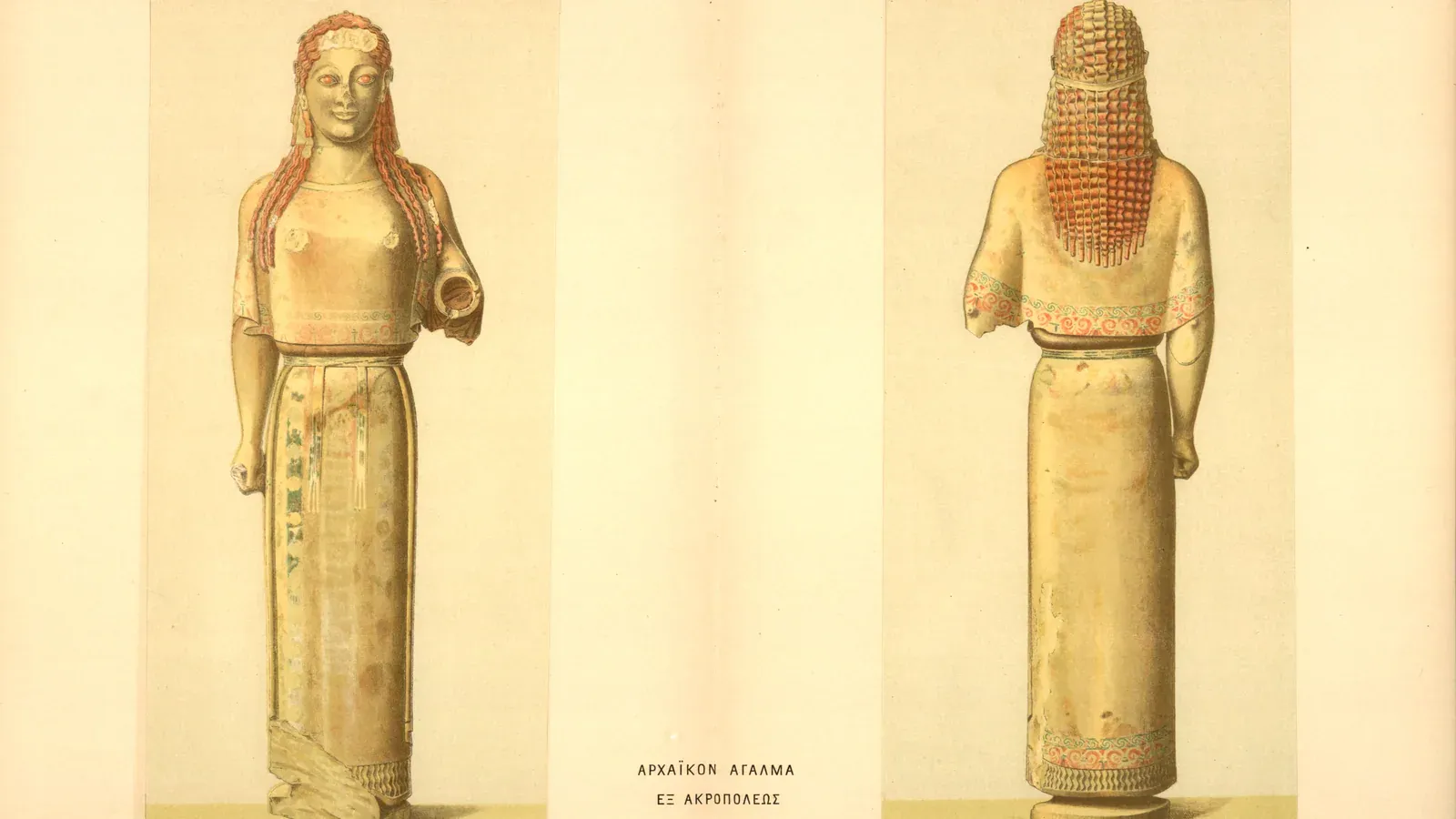
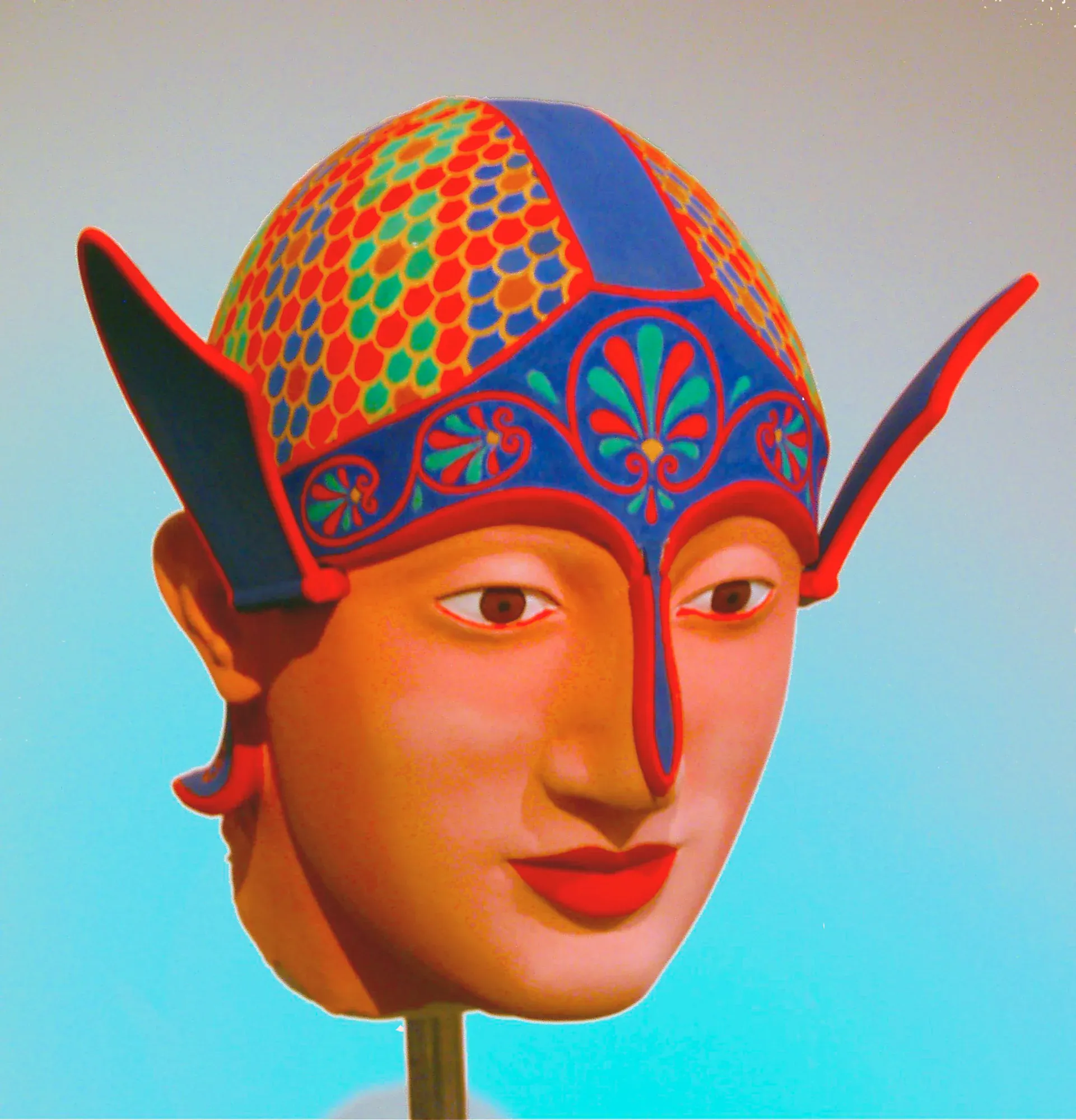
The ancient Greek sculptures that appear white today were not necessarily intended to look that way. Many marble statues and architectural carvings were painted blue, red, yellow, black and other colours. Their present appearance largely reflects centuries of weathering, burial, cleaning and the loss of materials applied to the stone.
Marble was a support, not always the finished surface
Greek sculptors prized pale stone from sources such as Paros, Naxos and Mount Pentelikon. Choosing white marble, however, did not necessarily mean leaving it completely exposed. The Metropolitan Museum’s Greek Art: From Prehistoric to Classical explains that marble surfaces could be polished and painted with natural pigments and a binding medium. Organic washes were also used to soften the raw stone’s brightness.
Paint was more than a decorative afterthought. Carving, surface texture and colour worked together. Stone could be finished differently to suggest skin, wool, linen or hair, while painted lines and patterns supplied information that could not be carved efficiently.
Bronze sculpture was colourful too. Fresh bronze had a golden rather than green appearance. Artists could add copper to represent lips or wounds, silver for teeth, and glass, stone or ivory for eyes. The dark green surface familiar from museums usually developed through later chemical change.
What colours did Greek artists use?
The palette differed across periods, regions and types of object. Materials identified on Greek sculpture and architecture include:
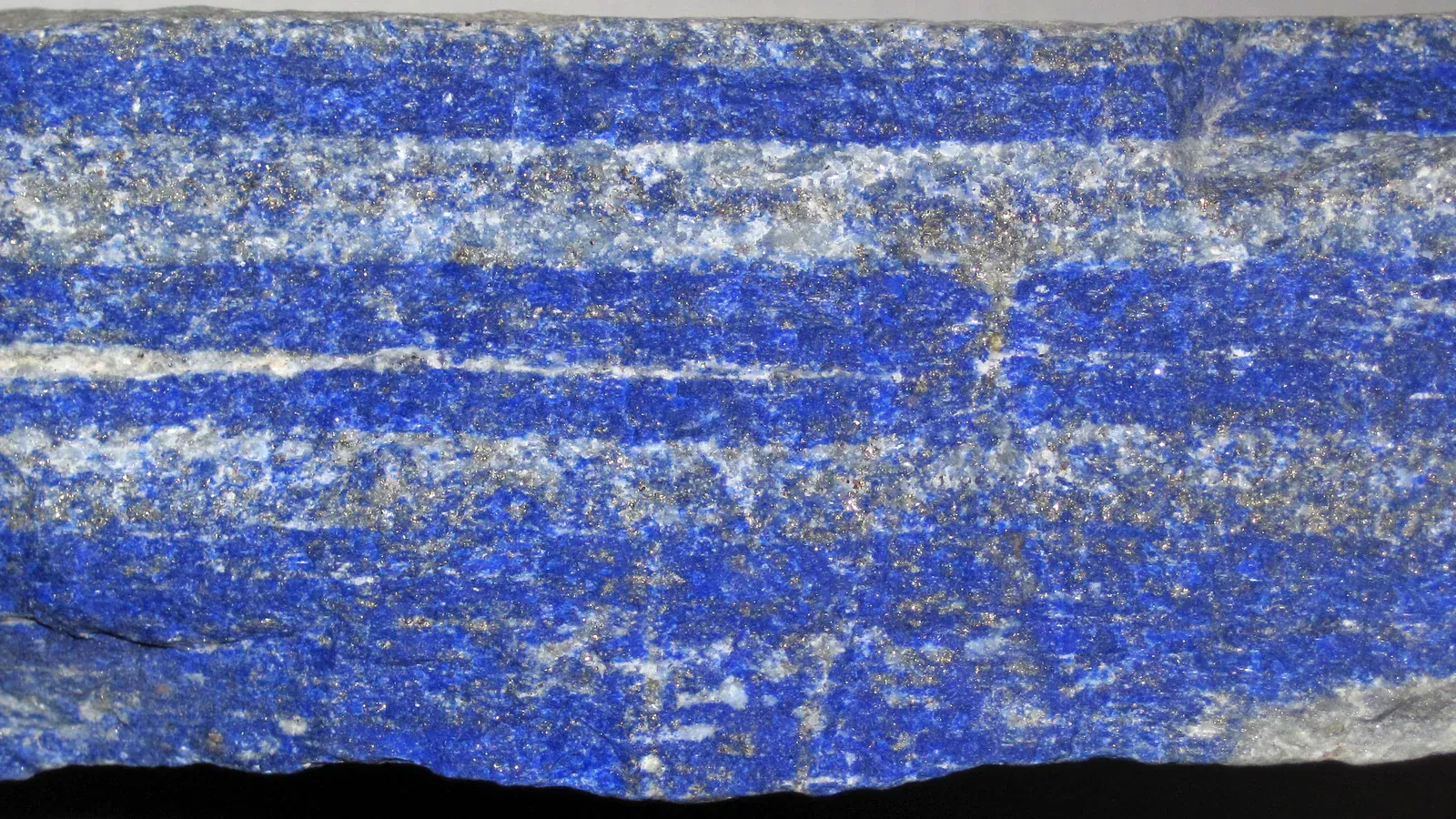
- Egyptian blue, a synthetic calcium copper silicate pigment.
- Azurite, a mineral-based copper blue.
- Red and yellow ochres rich in iron oxides.
- Cinnabar for particular intense reds.
- Carbon black for outlines and small details.
- White pigments, gilding and organic colourants, some of which survive poorly.
On a Greek funerary sphinx made around 530 BCE, researchers at The Metropolitan Museum found Egyptian blue, azurite, red and yellow ochres, and carbon black. Different blues decorated the wings and other features, while black defined details and ochres coloured the hair and diadem. The investigation is described in the museum’s Ancient Greek Sculpture in Color.
Colour could imitate skin, textiles and jewellery, but it also clarified patterns, divine attributes and differences between materials. A figure mounted high on a temple would not have been perceived like an isolated white statue displayed at eye level in a modern gallery.
How can we tell that the sculptures were painted?
Some objects retain pigment that is visible to the naked eye, particularly in folds, recesses and sheltered areas. Ancient texts also refer to coloured sculpture, while painted pottery and wall paintings provide supporting visual evidence. Today, however, laboratory techniques can reveal traces too small or altered to see normally.
Visible-induced luminescence imaging, or VIL, is especially effective at detecting Egyptian blue. When exposed to visible light, this pigment emits infrared radiation that can be captured with a modified camera. X-ray fluorescence can identify chemical elements, while Raman spectroscopy, microscopy and the analysis of minute samples help researchers distinguish pigments and paint layers.
A 2023 study in the journal Antiquity detected Egyptian blue on eleven sculptures from the Parthenon’s pediments and on one figure from its frieze. Researchers also documented a purple colourant and elaborate figurative designs on clothing. Colour was therefore capable of adding complex patterns that emerged and disappeared across carved folds. The study, The goddess’ new clothes: the carving and polychromy of the Parthenon Sculptures, also stresses that surviving evidence is often microscopic and open to cautious interpretation.
Where did the paint go?
Mineral pigments can be durable, but painted finishes also relied on organic binding materials vulnerable to moisture, sunlight, temperature changes and biological activity. Over many centuries, sculptures were exposed to the elements, buried, moved or affected by fire, pollution and mineral deposits.
Human intervention caused further losses. Handling, mould-making and some historical cleaning treatments removed material from ancient surfaces. Research on the Parthenon sculptures notes that efforts intended to recover supposedly original white marble sometimes destroyed surviving paint.
The absence of obvious colour today is therefore not evidence that colour never existed. The most durable surviving part of an object does not necessarily represent its complete original appearance.
How white marble became the classical ideal
When Renaissance artists and collectors encountered excavated sculpture, much of its painted decoration had already vanished. Many familiar statues were also Roman marble versions of Greek works originally cast in bronze.
During the eighteenth and nineteenth centuries, Neoclassicism turned bare marble into an artistic ideal associated with order, purity and beauty. The Getty Museum notes that this movement strengthened the taste for white sculpture even though classical texts and archaeological discoveries provided evidence of ancient polychromy.
The idea became so influential that the condition in which many sculptures survived was mistaken for a deliberate Greek preference. Later viewers also connected white marble with modern ideas about beauty, cultural authority and, in some contexts, racial identity. Restoring colour to the discussion does not justify projecting present-day racial categories onto ancient Greece. It helps distinguish material evidence from later cultural assumptions.
Can we reconstruct their exact appearance?
Modern colour reconstructions combine surviving pigment, patterns revealed by multispectral imaging, chemical analysis, comparisons with related objects and ancient written evidence. They are not arbitrary inventions, but neither are they snapshots of the past.
Researchers may identify the outline of a pattern and several pigments without knowing the original saturation, binding medium, complete sequence of layers or treatment of every surface. The same incomplete evidence can support more than one plausible proposal.
The Liebieghaus Polychromy Research Project tests such proposals on physical replicas. Its researchers treat reconstructions as revisable scientific models that can be adjusted as new evidence emerges.
The reliable conclusion is not that every Greek statue looked alike or that every centimetre of marble was hidden beneath opaque paint. It is that colour was a common and meaningful component of Greek sculpture. The precise appearance of individual works remains open to research; the notion of an entirely white marble Greece does not.